Monday, January 21, 2019
Acids and Bases
1. Review the Content Slides Acids and Bases on the D2L site.
2. At the pH Scale PhET simulation, complete the For Teachers activities “pH Scale inquiry-based intro to acid-base” posted by Trish Loeblein on the pH Scale simulation at PhET (http://phet.colorado.edu/en/simulation/ph-scale). On your blog post the answers with your scientific explanations from the “Clicker_questions_pH_Scale.pdf ” posted by Trish. NOTE: As you work with PHET, you may need to create an account at this site.
For question one on the clicker questions it is incorrect. The color of a substance does not indicate if it is an acid, base or salt. The litmus test indicates weather a substance is one of the three. If the litmus test turns red then it is an acid. If it turns blue it is a base.
For question 2 it asks using an image, which of the solutions is basic. Using the pH scale we know that for a solution to be a base it needs to have a ph between 7 and 14. Sample B has a pH of 7.4 and sample C has a pH of 12.06 making two out of the three samples bases.
Question 3 has drawing of H3O and OH on a molecular level. Out of the three options one of them is acidic. The answer is the third image because of the number of hydrogen molecules. That’s what the H in PH stands for. Image 1 is comprised mostly of oxygen molecules. Image b has an equal number of hydrogen and oxygen molecules. Hat levels image C with the largest number of hydrogen molecules. These are also called hydronium Ions.
Question 4 is asking which solution is basic based on the amount of substances in each section. By observation, sample A is neutral with equal parts in the solution. Sample B has more oxygen ions in it. Sample C has more hydrogen ions in it. The correct answer is sample B.
Question 5 is asking which solution is acidic based on the makeup of the three samples. The answer is that samples A and B contain more hydrogen ions and if neutralized will still be acidic.
Question 6 is asking about how adding water will affect the pH of a solution. Water is the most neutral substance so adding it to the solution that has a pH of 5 will make it it be less acidic and increase the pH.
Question 7 asks the reverse question, what happens to the substance if the pH has water added to it. Again, because water is neutral the pH will decrease and lesson the substance ability to be a base.
Question 8 has three susbtances a) pH 6.5 b) pH 7.40 and c) pH12.06 and asks to order them from most acidic to most basic. Looking at a pH scale, 7 is the most neutral substance. 14 is the strongest a base can be and 0 is the strongest an acid can be. The order is A,B,C.
Question 9 shows a bar graph and asks the same question. Order the substances from most acidic to most basic. Option A has a neutral pH of 7, C has a more acidic pH and B has a more basic pH. The order is C,B,A.
Question 10 “ If spit has a pH of 7.4 what does that tell you about the water equilibrium?”. The pH is not at 7 which means something was added to make the solution more basic and it had an effect on the oxygen.
3. At the Acid-Base Solutions PhET simulation, complete the For Teachers activities “Strong and Weak Acids” posted by Kelly Lancaster, Laurie Langdon on the Acid-Base Solutions simulation (http://phet.colorado.edu/en/simulation/acid-base-solutions) and post on your blog your data and answers to the questions posed in their exercise, "Acid_CU_GenChem2_Activity ".
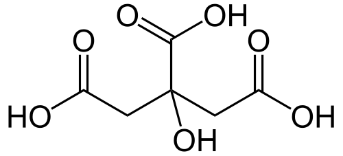
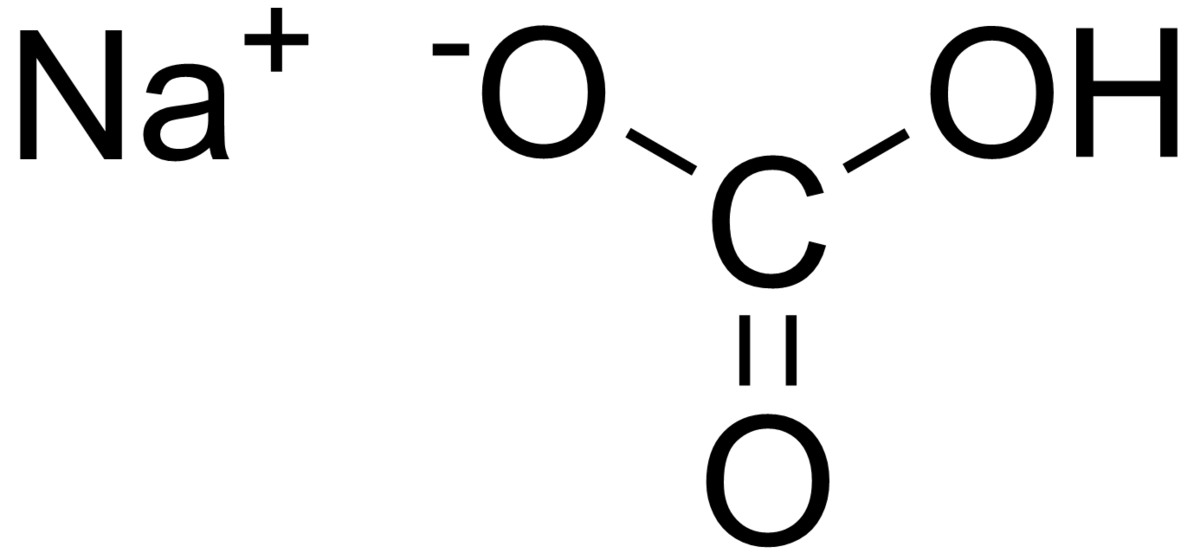
4. Also post on your blog the common name, chemical name and chemical structure for a common acid and base that you commonly use
An acid found in my home is Citric acid. (H3C6H5O7) IUPAC name is 2-Hydroxypropane-1,2,3-tricarboxylic acid. It has a pH of 2.2
A common base found in my home is Baking Soda, Sodium Bicarbonate is the chemical name and it has a pH of 8.3
Kelvin meet the states of matter
1. Convert 0°F, 32°F, 70°F, and 212°F to Kelvin
0f= 255.372 Kelvin 32F= 273.15 Kevin 70F=294.261 212F= 373.15
2. Under the For Teachers area of the State of Matter webpage, complete the Teacher Submitted Activities: States of Matter Simulation Lab by Kelly Vaughan (may need to click on "browse more activities.") Complete the lab worksheet as if you were a student, and then post this on your blog. You can scan it or just take a picture of it. NOTE: As you work with PHET, you may need to create an account at this site.


3. In the States of Matter simulation, choose the Solid, Liquid, and Gas Tab at the top of the screen. Choose the water molecule and cool the water to 0 K. Describe how the water molecules are aligned and attracted to each other. Which atoms are attracted to which other atoms?
Looking at the image the hydrogen atoms connect to the oxygen atoms and are put into a fixed pattern.
4. Discuss why this statement is not true for water: As a liquid freezes, the molecules come closer together and have a greater attraction for each other.
It isn’t a matter of attraction it a covalent bond. Like with oxygen the bonds are created in a hexagonal pattern. They are not attracted to each other because there is a lack of heat there is less room for the molecules to move around.
5. Switch to the Phase Changes Tab on the States of Matter simulation. Notice how on the bottom right there is a small red dot that indicates where the system is at as far as temperature, pressure and state of matter. Play with the simulation to notice changes, notice that when you push down the pressure can go way up and explode the box. On your blog, report temperature and pressure required to make oxygen a liquid. This is sometimes how the oxygen exists in pressurized oxygen tanks, perhaps like ones you may use to go diving.
The temperature to make oxygen a liquid is at 77K. The pressure need is about 1.5 atm.
6. Switch to the Molecule Polarity simulation and go the Real Molecules tab. Post an image of a molecule that is considered polar and an image of a molecule that is non-polar. Java Script would not run on the computer and the sim could not be accessed.
7. In Activity 1, students explored the addition of salt to water to affect the freezing point. In terms of polarity, why are salt ions easily dissolved in water? At the molecular level, why does the addition of salt prevent the formation of ice at certain temperatures?
Water molecules are polar and attract both the positive sodium ions and the negative chloride ions. Salt is used to keep ice from forming because it has a lower freezing point. If you know that a snowstorm is coming then you can put ice down to keep the freezing point down when the snow falls.
8. Identify and describe at least two Wisconsin Standards for Science (WSS) that this activity addresses
SCI.CC2.3-5 Students routinely identify and test causal relationships and use these relationships to explain the change. They understand events that occur together with regularity may or may not signify a cause and effect relationship.
Having students explore the states of matter using the simulation and various molecules offers a chance to test a hypothesis. Applying the heat and ice in the simulation also shows the relationship to the states of matter and how they change.
SCI.SEP3.A.3-5 Students plan and carry out investigations that control variables and provide evidence to support explanations or design solutions. This includes the following: Collaboratively plan and conduct an investigation to produce data to serve as the basis for evidence, using fair tests in which variables are controlled and the number of trials considered. Evaluate appropriate methods and tools for collecting data. Make observations and measurements to produce data to serve as the basis for evidence for an explanation of a phenomenon or test a design solution. Make predictions about what would happen if a variable changes. Test two different models of the same proposed object, tool, or process to determine which better meets the criteria for success.
Using the simulations students could find out data points such the boiling and freezing points of some of the samples like argon. They were able to test out the hypothesis for the behaviors of molecules in the different states of matter. Tests could be replicated and screenshotted as proof of the experiments. The simulations offer multiple variables to use and explore as well. Students can also use the simulations for diagrams. Students can also design their own experiments from what the simulation offers.
Sunday, January 20, 2019
Student Worksheet!
Student Guide for Density Simulation: Name: Leah Corso
(note: “sink” means stays on the bottom)![MC900432481[1]](file:///C:/Users/Student/AppData/Local/Temp/msohtmlclip1/01/clip_image002.gif)
|
Start: 1.
2. Click on the first link
3. Click on the
button
4. Experiment with choosing a material:
|
material
|
S=sinker
F=Floater
|
Density given
|
|
Wood
|
F
|
.4 kg/L
|
|
Styrofoam
|
F
|
.15 kg/L
|
|
ice
|
F
|
.92 Kg/L
|
|
brick
|
S
|
2.0 kg/L
|
|
aluminum
|
S
|
2.7 kg/L
|
|

5. Try to get aluminum to float.
Talk with your partner about this possibility- can you change the mass of the aluminum block without changing the volume of the aluminum block? You can not change the mass. If something has increased mass it will have increased volume.
6. What do you and your partner notice about the density triangle at the bottom of the box? Why do you think this does or does not move? There is more molcules packed into that space. Volume and mass will not affect density.
7. How does the density of aluminum (2.70 kg/L) help explain what you see?
In the “Blocks” box, click on Mystery:
|

|
Sample
|
Starting volume of water (A)
|
volume of water and block (B)
|
Volume of block alone
(difference B-A)
|
Mass (kg)
|
Density (kg/L)
|
What is it most likely made of? (hint: use Show Table for help)
|
|
A
|
100-L
|
103.38
|
3.38
|
65.14
|
19.3
|
Gold
|
|
B
|
100-L
|
100.64
|
.64
|
.64
|
1
|
Water
|
|
C
|
100-L
|
104.8
|
4.08
|
4.08
|
1
|
Water
|
|
D
|
100-L
|
103.10
|
3.10
|
3.1
|
1
|
Water
|
|
E
|
100-L
|
101.0
|
1
|
3.53
|
3.53
|
Dimond
|
9.
Look closely at green box C and red box D and discuss your observations.
|
1st observation
Green box C is slightly larger
|
2nd observation
Box C has a larger mass by .98 kg
|
3rd observation
Both are water
|
10. Dear Students,
I am going to build a boat. My partner says I cannot put a refrigerator and a television in my boat because that would make it too heavy-and the boat might sink. Then we would be swimming with the sharks!!!!
__________________________________________________________________________________________________________________________________________
…you can write on the back if you need more room to write! Signed, your teacher
The first step is to measure the boat to understand how much volume is there. The next step would be to calculate the density of each object. If one object has a greater density the best thing to do would be to leave that object behind and only take one. However if both have the same density it would be acceptable to take them on the boat. Looking at boxes C and D they both have different masses but still carried the same density. This can be applied to your appliances.
The Dense Scoop on Density!
1. Run the Build an Atom simulation http://phet.colorado.edu/en/simulation/build-an-atom and build a neutral lithium atom and a neutral boron atom. Take a picture, or a screenshot, of these two atoms and place them on your blog. List the number of protons, neutrons, and electrons for each. Also look up and post the density for each of the elements on your blog.
A neutral lithium atom has 3 protons, 4 neutrons, and 3electrons. The density of lithium is measured in Kilograms and is .534 grams per cubic centimeter.
A neutral boron atom has 5 proton 6 neutrons and 5 electrons. The density of a boron is measured in Kilograms and is 2.37 grams per cubic centimeter
2. Define density and the equation for density and post on your blog.Density is how compact a molecule or group of molecules is. Atoms with a higher atomic mass typically have a higher density. The equation for density is mass divided by volume. In the equation, P represents density while mass is the letter m and volume is the letter v. M/V= P
2. Run the Density simulation http://phet.colorado.edu/en/simulation/density and complete one(your choice) of the prepared For Teachers activities on the simulations page and post your results on your blog. The activity you choose should be one of the student intended activities.
I chose Jackie Esler's activity and my work can be found on the next blog titled "Student worksheet!" All of my answers are bolded and/or highlighted
|
Block
|
Mass
|
Volume
|
Density
|
Name of Object
|
|
A
|
65.14 kg
|
3.38 L
|
19.3
|
Gold
|
|
B
|
.64 kg
|
.64 L
|
1
|
Water
|
|
C
|
4.08 Kg
|
4.08L
|
1
|
Water
|
|
D
|
3.10 kg
|
3.1 L
|
1
|
Water
|
|
E
|
3.53 kg
|
1 L
|
3.53
|
Dimond
|
The results of the experiment are that 3 out of 5 mystery objects are water. The first block was gold and the last block was Dimond.
5. Identify and post on your blog the Wisconsin Standards for Science (WSS) that could be met through these activities completed in Activity 5
SCI.CC3.3-5 Students recognize natural objects and observable phenomena exist from the very small to the immensely large. They use standard units to measure and describe physical quantities such as mass, time, temperature, and volume.
Observing the change in volume for each object in the simulation shows observation skills on both small and large scale. Students also use mass, density ,and volume in the experiments.
SCI.SEP3.A.3-5 Students plan and carry out investigations that control variables and provide evidence to support explanations or design solutions. This includes the following: Make observations and measurements to produce data to serve as the basis for evidence for an explanation of a phenomenon or test a design solution. Make predictions about what would happen if a variable changes.
Using the PHET Simulator students are able to make observations and clear measurements for experiments and test out their hypothesis. They are also able to manipulate multiple variables using this simulation to answer more questions and continue making predictions.
SCI.PS1.A.5 Matter exists as particles that are too small to see. Matter is always conserved even if it seems to disappear. Measurements of a variety of observable properties can be used to identify particular materials.
Having the mystery materials allowed students to explore their measurable qualities to find out what the objects were.
Subscribe to:
Posts (Atom)